The local story
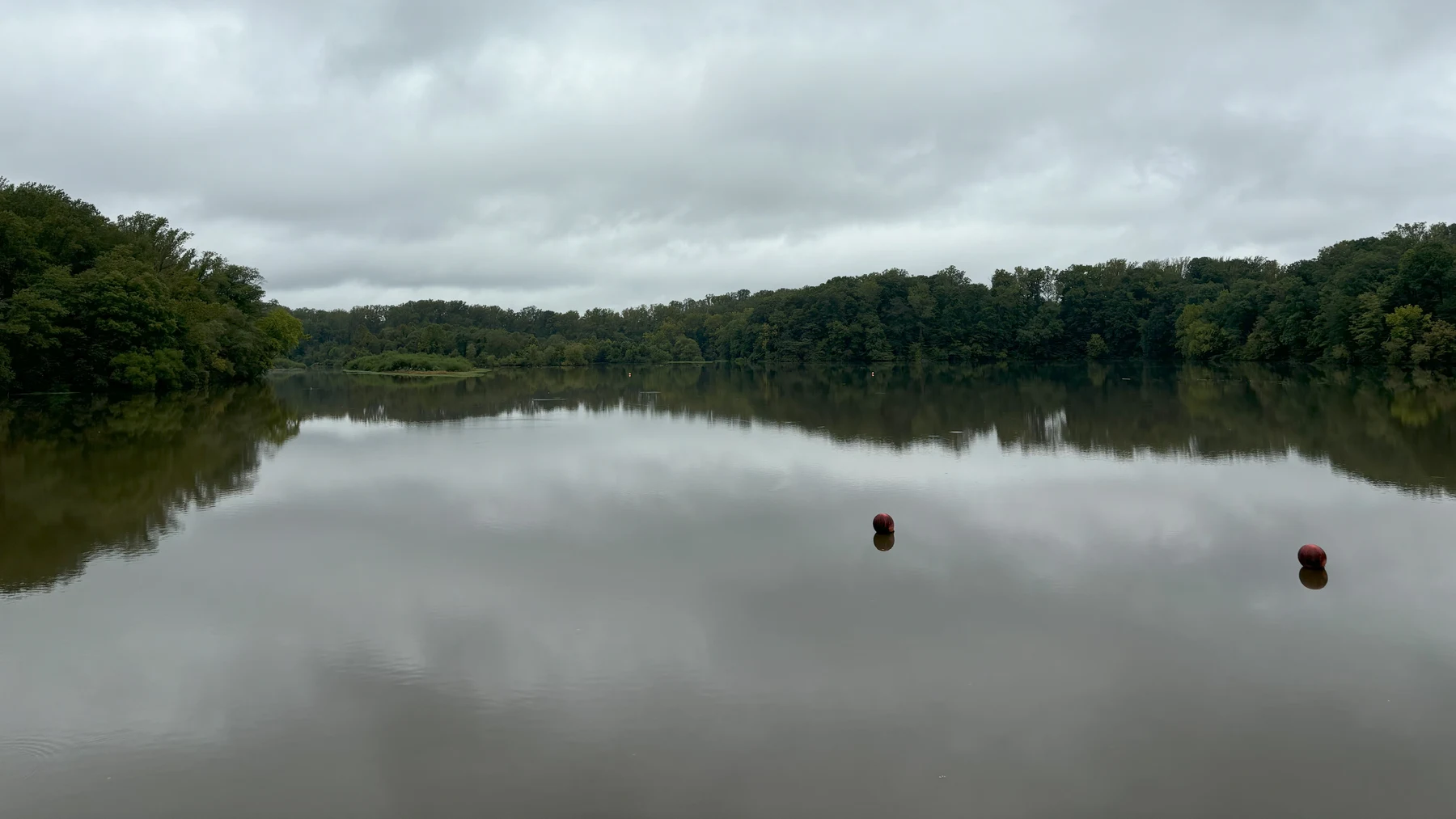
Lake Accotink looks natural because the neighborhood has grown around it. The water, however, is engineered—and its future has always depended on what people are willing to engineer next.
That is why the yard signs persist. They are not only about saving a view. They are about whether a beloved public place can survive the sediment carried into it by the developed watershed upstream.
The first surprise
The lake has been made, removed, and made again.
The reservoir began with an Army dam in 1918 to supply Camp A.A. Humphreys, now Fort Belvoir. That first dam breached in 1922. The Army built the present lake around 1940; Fairfax County later acquired the parkland. The water visitors see beside the trails is therefore a maintained piece of infrastructure, not a naturally occurring lake.
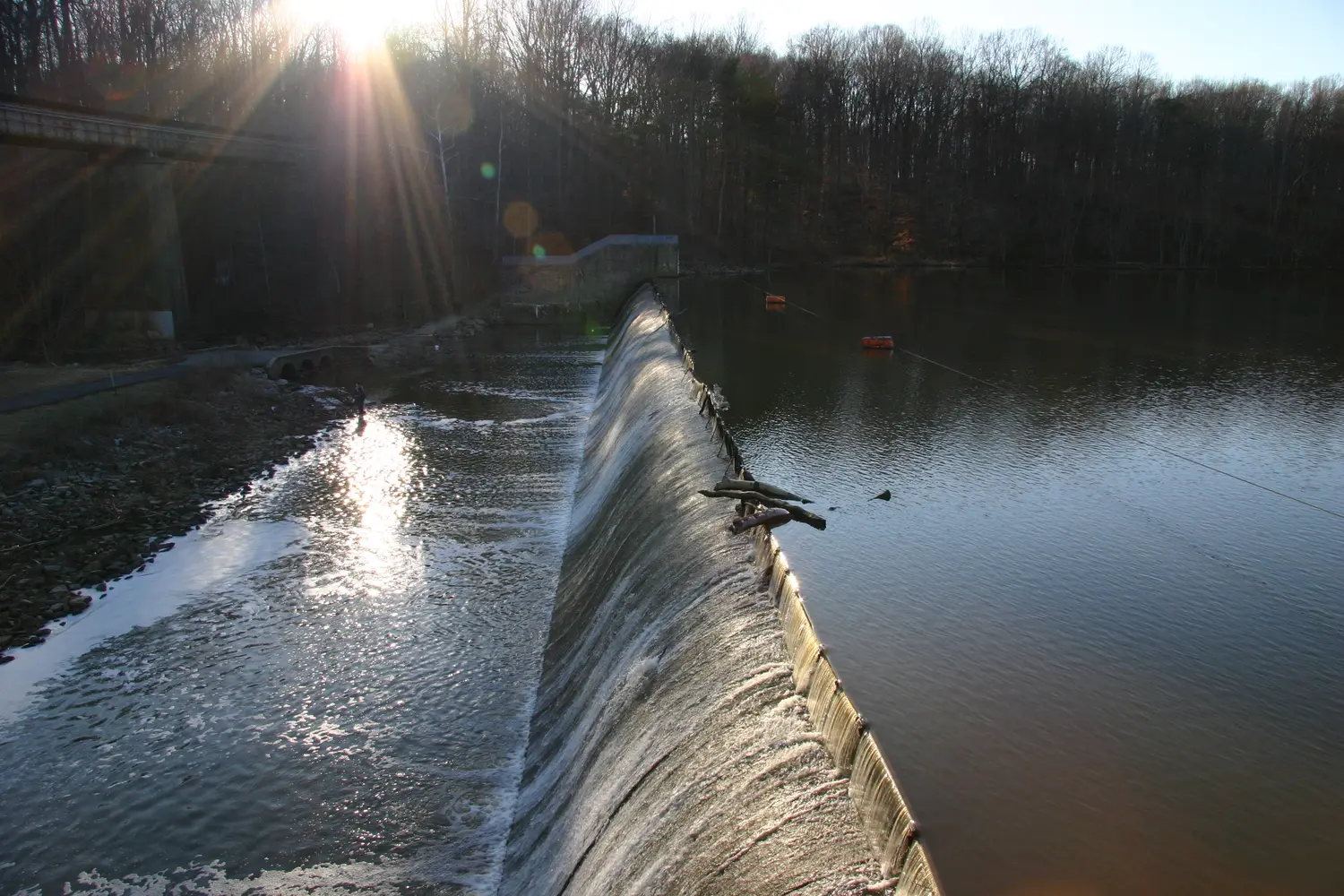
The park access road follows part of the old Orange and Alexandria Railroad bed, and the rail bridge by the dam is another visible layer of the site’s history. Recreation grew around a reservoir whose future still depends on the dam, the creek and the sediment carried into it.

The sediment problem
The lake is slowly filling with the watershed.
Development across the 30-square-mile watershed increased runoff and eroded streambanks, sending sediment down Accotink Creek. County records say the lake lost half its capacity; dredges in 1985 and 2008 did not stop the next accumulation. A 2016 estimate put the incoming load around 23,000 cubic yards a year. The current sediment study is measuring what enters, settles and leaves before anyone fixes a new maintenance interval.
Dredging requires more than digging: wet material must be dewatered, processed, transported and placed somewhere. A February 2023 comparison estimated $95.3 million for a base dredge and further maintenance events, using an assumed 500,000 cubic yards and a disposal site. Those were planning estimates for an earlier large-lake program, not the cost of today’s smaller-lake study or an approved budget. The task force reviewed that cycle in 2023; in January 2024 the Board directed a feasibility study of preserving a smaller lake, including possible on-site reuse of sediment and wetland or grassland areas.

Where the process stands
The county is studying a 20-to-40-acre lake while the technical work continues through 2027.
Fairfax County’s August 25, 2026 update says the team is modeling several layouts for 20 to 40 acres of water at 4 to 8 feet deep. A smaller footprint could retain some open-water scenery and recreation while using other areas for wetland or grassland habitat. The actual shoreline, habitat design, boating implications and available activities depend on the alternative selected and later permits; none of these scenarios is an adopted design.
The dam assessment is complete: the spillway and stilling basin are generally in fair condition with localized poor areas, and targeted repairs plus greater spillway capacity are needed for long-term safety and state dam requirements. The preservation study is expected to extend through 2027, while USGS sediment analysis and publication continue into 2028. No preferred lake footprint, funding package, construction schedule, or final design has been adopted.
The county’s timeline calls for an initial feasibility study in fall 2026, a possible update after field data through the end of 2027, and USGS analysis and publication into 2028. Selection of a preferred alternative precedes dredge design and permitting. The June 2026 open house is past; the county accepts comments by email or mail through its project manager and posts materials on its engagement page. These are study milestones, not a construction timetable.
Trent’s original videos
Watch the reports behind this story.
Why this matters locally
Lake Accotink is scenery, recreation, habitat, stormwater infrastructure, and neighborhood identity at once. Any solution has to work as an engineered system and still feel like the public place people are fighting to keep.
Sources and further reading
Where the reporting comes from.
This article draws on public records, official statements, and attributed local reporting. Each link opens the original source.
- Fairfax County: Smaller Lake Accotink Preservation Feasibility Study ↗
- Fairfax County: Lake Accotink Park and current study summary ↗
- Lake Accotink Task Force findings report ↗
- Fairfax County Park Authority: lake history and planning boards ↗
- County-hosted Lake Accotink engagement and study resources ↗
- Fairfax County: February 2023 dredging program cost summary (historical estimate) ↗